
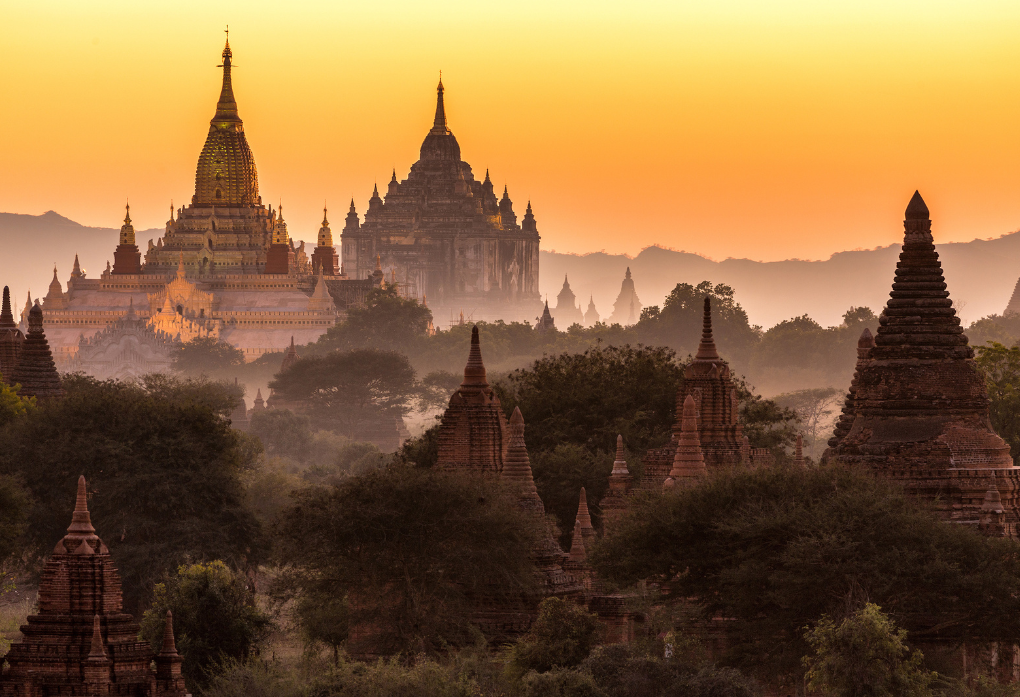
Mystical ruins of Bagan: explore the plains of temples
Bagan, sitting gracefully on the Ayeyarwady River plain in central Myanmar, was the capital of the ancient Pagan Kingdom and is now one of Southeast Asia’s most breathtaking archaeological treasures. Spreading across 104 km² and home to over 2,200 surviving temples and pagodas, it’s a UNESCO World Heritage Site that feels like an open-air museum—yet still alive with worship and local life ([Wikipedia][1]).
Where to stay
Accommodation in Bagan ranges from charming riverside lodges to boutique hotels. In Nyaung U, expect comfortable mid-range options for US$20–50/night, while Old Bagan, offers atmospheric stays near ruins for a premium experience. For those seeking luxury, properties like 1 Hotel @ Tharabar Gate and Bagan Thiripyitsaya Sanctuary Resort offer garden-facing villas from US$110–135/night ([Condé Nast Traveler][2]).
Getting around the temples
Getting around is best done on electric bikes (\~2,000 kyat/day) or traditional bicycles, allowing independence to roam between temples at your own pace. For a sunrise view, smaller pagodas off Anawratha Road offer magical vistas away from crowds ([Reddit][3]). If your budget allows, dawn hot-air balloon flights—operating October through April—offer signature aerial views; standard flights start at around US \$139, while premium options go up to US \$450 ([Bagan Balloon][4]).
Iconic temples you can’t miss
Among the thousands, several temples stand out. Thatbyinnyu Temple, built in 1150–51, is the tallest in Bagan at 66 m and offers a glimpse into Buddhist monastery life with its past monastic and library use; it's currently under restoration ([Wikipedia][5]). Sulamani Temple, dating to 1183, features stunning brickwork and frescoes influenced by earlier styles ([Wikipedia][6]). Another must-see is Dhammayangyi Temple, the largest by footprint, known for its austere design and interior mystery—only its corridors are accessible ([Wikipedia][7]).
Best time to visit
The ideal time to visit is during the dry season, November to February, when comfortable temperatures (around 30 °C) and clear skies are perfect for temple exploration and ballooning ([Condé Nast Traveler][2]). The monsoon off-season often deters tourists, softening the landscape and reducing crowds, though many temples stay accessible .
Dining and local culture
Bagan’s charm extends to its laid-back cafes serving local Burmese dishes, snacks, and tea in fan-cooled or open-air settings. A typical day can begin with tsin thoke (tea leaf salad) and end with a riverside sunset and fresh grilled fish. Don’t miss the simplicity of rural life bursting around you—elephants carry temple bricks, monks chant, and artisans still craft lacquerware in nearby villages .
Insider tips and practical advice
Visitors must purchase a US$20 three-day archaeological zone permit, which is checked upon arrival . Climbing temples is no longer allowed following their UNESCO listing in 2019; opt for organic vantage points to catch stunning sunrises instead . For balloon rides, reserve your spot early and verify what’s included; most include hotel pickup, refreshments, photo souvenirs, and champagne upon landing ([Culture Exchange][8]).
Bagan’s serene plains, woven with temples, are more than a historical site—they're a living, spiritual canvas that continues to resonate with faith and heritage. Whether you glide above them at dawn, wander among brick sentinels, or simply sip tea as locals perform rituals, Bagan offers a timeless invitation to feel connected to Myanmar’s mystical soul.


